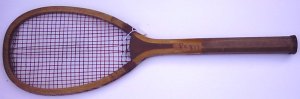
When the Vicar won Wimbledon

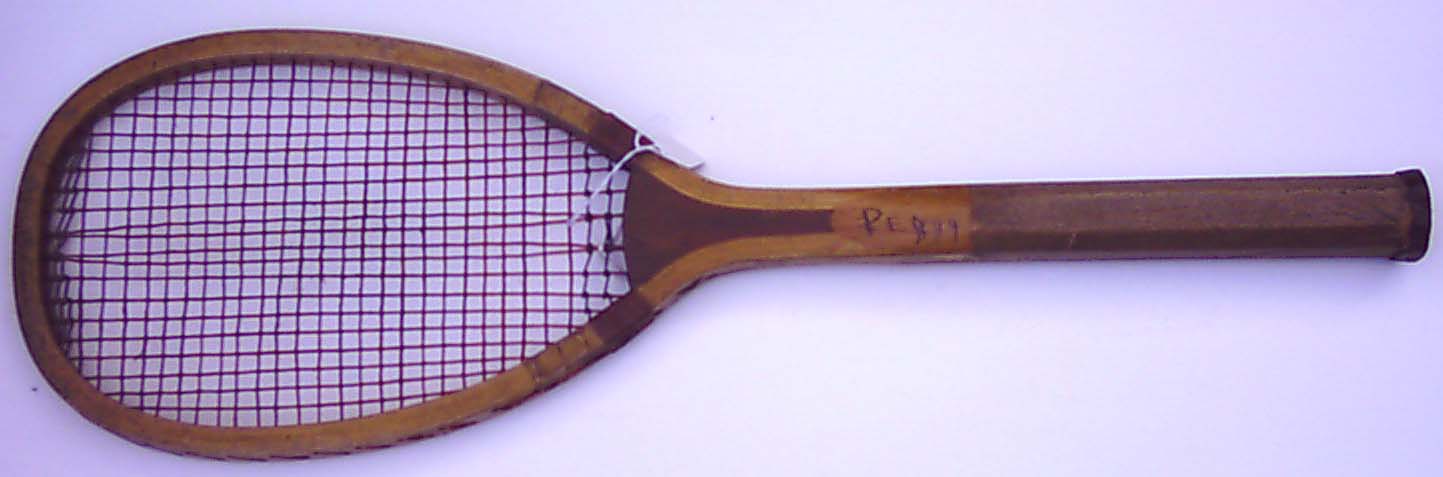
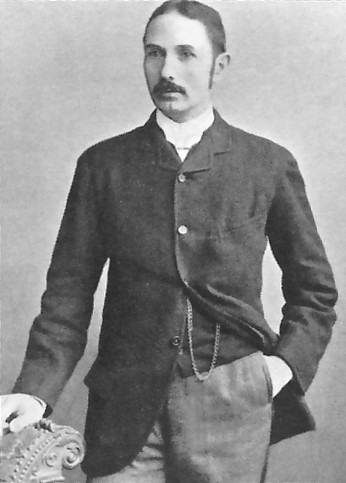
b10023On 21st August 1935, the Revd John Thorneycroft Hartley, British Tennis Champion died. He was the only clergyman to win Wimbledon.

Born in Wolverhampton, John Hartley was ordained priest in the Church of England and was appointed the Vicar of Burneston in North Yorkshire. He appears to have held the living for a good number of years and was by all accounts an energetic and conscientious priest. His chief claim to fame before his victory at Wimbledon was to have married Alice Lascelles, one of the nieces of the Earl of Harwood. It is said that when he was courting her he would take a short cut to her family home by riding to the river and then swimming across it. Alice would meet him in a carriage and then take him home in it.

In 1879 the Wimbledon quarter-finals were held on a Saturday, with the semi-finals to be played on Monday and the final on Tuesday. On Saturday evening, having won his quarter final, the Reverend Hartley took the train back to Yorkshire and took services and preached a sermon as usual on Sunday. He was then told that one of his parishioners was ill and likely to die. Hartley went to see him and spent the whole night there until the man died in the early hours of Monday morning.

Hartley then went back to the vicarage and after collecting some sandwiches, rode his horse to Thirsk station and got the steam train to London. From King’s Cross station he hailed a horse drawn cab to Wimbledon, changing into his tennis clothes on the journey. Fortunately for him his semi-final against C. F. Parr was interrupted by rain, which gave him a chance to rest.

On Tuesday he had to play the final against an Irishman, Vere St Leger Goold, who had had the advantage of having had a rest day on Monday.  Goold was a very energetic player and was one of the earliest to be noted for coming off the base line.  Hartley was a baseline player and is described as playing “steadily”.   Despite the disadvantage which his exertions must have created, Hartley won 6-4, 6-4, 6-3. Goold was a notorious gambler and socialite who was later to become famous himself as the only Wimbledon finalist to be convicted of murder.

Reverend Hartley won the title the next year in 1880. when hJohn_hartleye again won, beating H. F. Lawford, 6-3, 6-2, 2-6, 6-3.
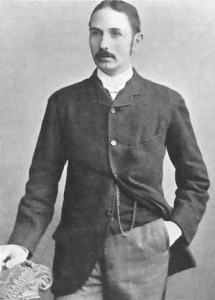
In 1881 Hartley again reached the final but this time he lost 6-0, 6-1, 6-1 to W. C. Renshaw. Renshaw went on to become the winner of the most Wimbledon men’s singles titles, totalling 7 – a feat only equalled by Pete Sampras and Roger Federer. 1881 was also the shortest title match on record, lasting only 37 minutes. It was reported that Hartley was suffering from “English cholera”. Use your imaginations.

Hartley disappears from tennis history at this point but he continued to be the vicar of Burneston until 1919. It is likely that he retired from active ministry at that time. He died in 1935, aged 86

Sources: Wikipedia and http://www.historywebsite.co.uk/genealogy/hartley/hartley.htm

Posted in Uncategorized | Leave a comment

Book Review: the Power of Habit

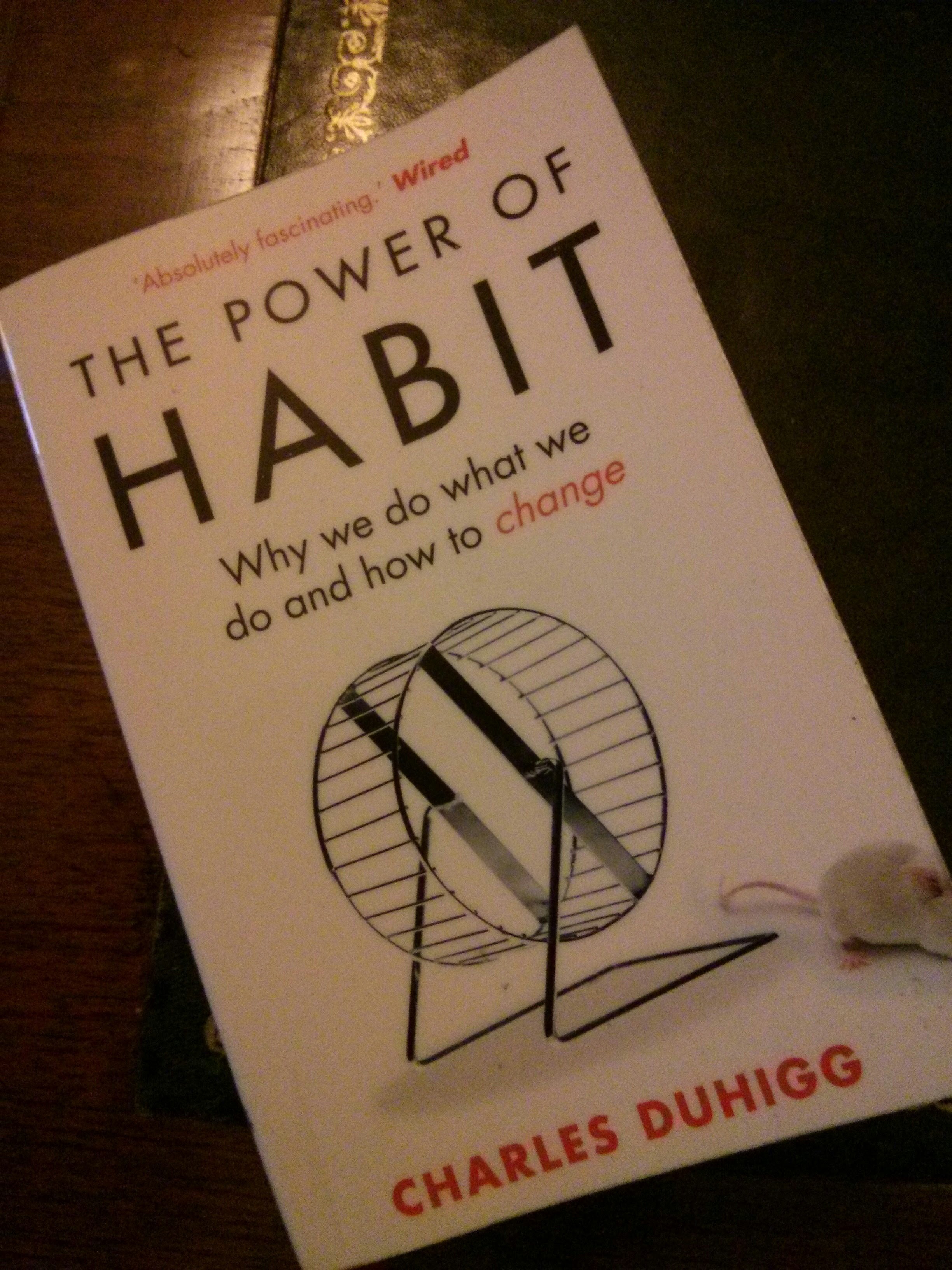
The Power of Habit Charles Duhigg (2012)

IMG_20150924_071546

How many people picked this book up from a shop display already weighed down with “self-help” books? How many thought they were getting a popular science book? In fact The Power of Habit is both and neither. Duhigg is a award-winning science writer and it shows, He guides us, for example, through the science of market research and the ways in which statistics and data are used to predict consumer choice: his style is never dry even though he takes us into some pretty arid areas. On the other hand, the self-help dimension of the book is reflected in the appendix which lays out a simple plan to change your habits: if you paid attention earlier in the book (my own feeling is the first part is the best), you’d know that the most effective way to “break” a habit is actually to substitute another. I found myself troubled at times by the self help aspect, as Duhigg has dunk from the well of that most American philosopher, William James, someone whose influence permeates contemporary culture. “The will to believe”  lies at the heart of what it means to be human: or as paraphrased in so many films, soaps and books – “all you have to do is believe in yourself”. Three things rescue this book from this naive sinkhole: firstly, Duhigg’s relentless insistence on the importance of the very small detail throughout the book. Habits can be very small things that cumulatively make very big changes. Secondly he recognises that habits are institutionalised: it’s not just people who can be changed, but organisations. He argues that, as with the individual, habits may be not only natural but beneficial. Thirdly he goes back to the philosophical question (although not named as such) of free will: to what extent are we truly free and able to change our habits?

I confess to a bad habit; I rarely finish books. Well I started making a small change – I read to the end of this book.

Posted in Uncategorized | 1 Comment

Jeremy Corbyn – a lesson from (seventeenth century) history

civil6

Jeremy Corbyn stands accused by his opponents of wanting to turn the clock back to the 1970s and 1980s. But wanting to turn the clock back isn’t unique to today’s left wing. Forget for a moment the religious dimension: with his notoriously frugal expense claims, cheap clothes and “plain speech” he could pass muster for a seventeenth century Puritan. Indeed there is something about the Left in Britain which has never abandoned its Puritan roots: “champagne socialist” is a term of abuse hurled not just from the Right.

But there is another parallel: the English like their revolutions conservative. The word revolution comes from the Latin “revolutio”, a turning round: it came, in England from the fifteenth century onwards to be applied to political changes from its original use to describe the motions of the celestial bodies. But it was not to gain widespread currency with its present meaning until the Glorious Revolution of 1688 which arguably marks the true end of the English Civil Wars. Edmund Burke proclaimed:

“The Revolution was made to preserve our ancient indisputable laws and liberties, and that ancient constitution of government which is our only security for law and liberty.”

When Burke set out the nature of what might in a parallel universe, be described as the “Great Dutch Invasion”, he wanted to emphasise the protection of “ancient rights” against those who wanted to introduce new and novel forms of government. But this has been the rallying call from Magna Carta onwards – the English must fight to protect their ancient rights against the innovation of despotism.

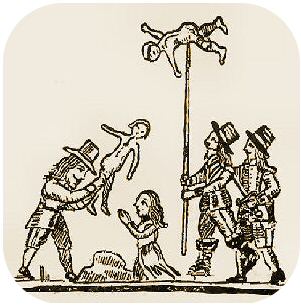
At no time was this desire for an idealised past more intense than during the English Civil Wars, also a period of unparalleled radical thought and change. The end of censorship in the 1640s unleashed a published tide of yearning for an idealised past – before the Norman yoke or even, for many, before the Fall of Adam.

Paradoxically a Corbyn-led Labour Party’s best hope for electoral victory may be to portray itself as the truly conservative party.

Posted in Uncategorized | Leave a comment

The Parable of the Dog Poo Tree

You may have seen one of these and wondered how they came to be. I’ve never made a real dog poo tree but maybe in my life I have made some metaphorical ones.dogpoo03

One day a man set out for a walk with his dog; the day was sunny and bright but before he left home he made sure he had his coat, his phone and plenty of dog poo bags. And the man and his dog set off for some healthy exercise together with the best of intentions.

Before long the dog stopped to have a poo. The man was annoyed. He was annoyed because he was not far into his walk on this fine, sunny bright day and the dog had pooed on the pavement right in front of someone’s house. Now, at heart, the man was a good man, so the thought that he could just leave it there only briefly passed his mind. And he definitely didn’t stop to pick it up just because he thought that someone might notice him leaving a mess on the pavement. No, he had set off with the best of intentions and he had planned well so he had his dog poo bags with him. He had hoped that the dog could have waited until he’d got to the fields and let him off the leash. But that wasn’t to be. He picked up the poo (did I mention that it was still warm? Perhaps I shouldn’t) and carried on for his walk.

What should he do with the dog’s poo, now safely in its black plastic bag? He knotted the top and looked for a bin. He knew there were no council bins nearby: this was a residential area after all. And it wasn’t bin day either: all the bins were next to their houses up their drives. He couldn’t walk all the way up to someone’s house to put the dog poo in. If only it was bin day.

He walked on, enjoying the sunny, bright day. But as he and the dog walked, the poo became more and more irksome to him. Why couldn’t his wife had walked the dog a bit further last night? Now he’d have to carry this for miles. As the dog ran across the fields ahead of him his mood was anything but bright and sunny. The whole universe seemed to revolve around the small plastic bag in his hand.

As they entered the woods the idea that had been forming in his head became clear. With a quick glance around him he lightly lobbed the bag into the bushes. He’d rather hoped it would disappear without trace but instead it caught on a branch a few feet from the path and hung there.

He didn’t look again but walked on. He tried not to think about the dog poo bag hanging there in the sun, the rain and the wind. But he chose some different walks with his dog which somehow seemed much nicer and which he always made with the best of intentions.

Posted in Uncategorized | Leave a comment

Do Vicars dream of electric bikes?

There is a great and honourable tradition of Vicars on bikes which I am proud to be a part of but I’m not wed to the old sit up and beg variety of the old cliche. I am happy to try anything, so when someone suggested that I try and electric bike, especially on a cheap and short rental period I said “Okey Dokey”.

I took myself down to Cycles Recycled (here), behind the BP garage in Clitheroe on North Street.

First appearances were not, its fair to say, good. I was presented with a choice of two different models, neither of which looked particularly exciting. Worse was to come; the one which I felt most comfortable on was (to me at least) the least best looking of the two.

But what a great experience to ride! I had, I suppose, expected that I would have to do nothing when the power was on. There are three power settings on the bike, adjustable from the handlebars: I thought, being a little nervous, that I’d have a go round the car park. At first everything seemed normal but then as I pushed forward I got a boost from the electric motor. Pedalling is almost no effort at all, even on the lowest setting. Take it up a hill and you need the next two power settings: but still very little effort required.

I rented mine for £21 for a month: in the first week I took it out to Twiston, Rimington and back (about 14 miles round trip with a 600 feet climb.) – the charge just lasted to the top of Church Brow and the Vicarage. With no charge the bike is heavy, mostly, I imagine, battery weight. Some bike recharge on downhill stretches: the one I rented didn’t

Is it for me? Two things work against it: firstly the cost – over £1000. Secondly I quite like the by-product of a cycle-ride that is a workout

Is it for you? If you look at local hills with panic because you haven’t cycled for some time or if you have mobility problems or a slight disability then yes and yes. I would definitely recommend it to anyone who is prepared to just give it a go: I certainly don’t regard my £21 as wasted; it has been a great month.

Posted in Uncategorized | 2 Comments

Slaidburn History

Spent yesterday morning at the Slaidburn Archive in the Heritage Centre: lots of information for local historians of the Hodder Valley, particularly about the Great Emigration: between 1683 -1715 43 adults and more children emigrated from the Quaker Settle Monthly Meeting, mostly from the Bowland area. The first party reached the New World a week before William Penn and his group.

On the way up to Slaidburn I reflected on how we view those trying to get to this country across the Mediterranean; in the grand sweep of history its not that long since our ancestors were the ones seeking a better and freer life.

The archive is based in the Heritage Centre, 25 Church St and is open 11 – 3 pm on Wednesdays and Fridays (01200 446161)

Posted in Uncategorized | Leave a comment

Diamond geezer

Imagine you are homeless. You have no money and you’re forced to sit with a tin cup begging for pennies off strangers. No money, no food. You’re looking through the collection of small change and you notice something unusual: the glint of a diamond ring. How did that get there?  Was it an accident? Has someone just felt really sorry for you and chucked in a ring. Your first instinct is to look around. The street is empty. What do you do? Take it to a jewellers and get the money for it? Or hand it in to the police?

Honestly, what would most of us do in that situation.

True story – this happened to a man called Billy Ray Harris in Kansas City. He decided to hand the ring in to police. Good news – the ring’s owner, a lady called Sarah Darling, hadn’t meant to donate it and she was so glad to get it back. Bad news – the ring turned out not to be very expensive and she didn’t have much money to give Billy Ray.

Not the end of the story – Sarah told their story on the internet and set up a donations page. At the last count 6,000 people from all over the world were so inspired by Billy Ray that they donated over $145,000.

Is honesty always the best policy? Life will teach you what I tell you now: not always. Thousands of years ago the Psalmist complained to God that the wicked prosper and good suffer.

But Jesus said that God knows everything that we do in secret and eventually, maybe not in this life, there is a reward for every good action. The reward that Billy Ray got is nothing compared to the rewards that God has in store for those who love him and follow his commandments.

(Sources London Evening Standard 26 Feb 2013 – quoted in Fortean Times 302 June 2013)

Posted in Uncategorized | Tagged | Leave a comment

Time for a new book about Boy Bishops

The medieval bishop was a figure of enormous power and authority, temporal and spiritual. How extraordinary then, that once a year a boy would be chosen to parody, indeed to become the bishop for a day. 

Posted in Uncategorized | Leave a comment

I’m an MP – Get me out of here

The abject figure of Nadine Dorries in the Australian jungle should be a major impetus to changing the ways in which our MPs are paid. Undoubtedly part of the motivation for her taking time out of the Parliamentary calendar to take up a diet of creepy-crawlies is a simple desire for self publicity. After all, as she is quoted as saying, 16 million people watch the show so that is where MPs (exhibitionist, narcissistic and egotistical bombasts) should be.

But behind the simple desire for publicity lies an insecurity. Like so many MPs in a much quieter way, Mad Nad as the tabloids have christened her, is working on a second career which will undoubtedly prove more financially rewarding than public service. Not so mad.

Why can’t MPs have just one job, working for us? Why do they have to collect directorships like boys collect football cards?

Church of England clergy are provided with housing and a stipend. A stipend is officially defined as the minimum needed to live on, although dependents and working spouses make that a very tricky calculation. If they live in a sufficiently generous parish they can claim expenses.

Why can’t we do the same with MPs?

Posted in Uncategorized | Leave a comment

Christmas bah humbug

Among other things, the Puritans attempted to abolish Christmas. Today many would wish they had had more success although perhaps for different reasons.

In the first half of the 17th century Christmas was both an important religious festival and a time when the English population would indulge in a variety of traditional pastimes. The 25th December was a public holiday, all places of work closed and people attended special church services. The next eleven days included additional masses, with business hours limited. During the twelve days of Christmas, buildings were dressed with rosemary, holly and ivy and as well as marking the day’s religious elements, there was also non-stop dancing, singing, drinking, exchanging of presents and stage plays. The population indulged in feasts of roast beef, plum porridge, minced pies and special ale. Twelfth Night, the final day of celebration, often saw a fresh bout of feasting and carnivals.The Puritan’s war on Christmas came to an end in 1660 with the restoration of the monarchy although Pepys describes the celebrations of the season as being more restrained than the pre-Commonwealth revelry.

It is worth noting at this point that the “excesses” only extended to the Twelve Days OF Christmas. In our secular age Christmas begins sometime in September, ramps up a notch after Halloween and ends in a blaze of advertising on Christmas Day.

But do we really see ourselves as the inheritors of the Puritan tradition? Traditions, whether Christian or not, bind us to the past.


Posted in Uncategorized | Leave a comment